The Weekly AI Digest
Week of 27 March – 2 April 2026
Top 5 AI Stories This Week

Anthropic's Claude Mythos Leak Rattles Markets
A misconfigured content management system at Anthropic left nearly 3,000 unpublished documents publicly searchable, including a draft blog post describing an unreleased model called Claude Mythos. Days later, the company accidentally leaked Claude Code's source code in a separate packaging error. Anthropic confirmed Mythos is real, calling it "a step change" in capabilities — a new tier above Opus with dramatically higher scores on coding, reasoning and cybersecurity. The leak triggered a sell-off in software stocks, with Bitcoin dropping to approximately $66,000.
Why it matters: For organisations deploying AI in security-sensitive environments, the Mythos revelations are a prompt to reassess threat models. Anthropic has reportedly warned government officials that models at this capability level make large-scale cyberattacks significantly more likely. For businesses evaluating Anthropic as a vendor, two data leaks in a single week raise legitimate questions about operational maturity at one of the world's most advanced AI labs.

Apple Opens Siri to Third-Party AI Chatbots in iOS 27
Bloomberg reported that Apple is building an Extensions system for iOS 27 that will let users choose between ChatGPT, Gemini, Claude, Grok and other AI chatbots directly inside Siri. The feature, expected at WWDC on June 8, ends OpenAI's exclusive Siri integration. Users will manage AI services through a new Settings menu and a dedicated App Store section. Apple's broader Siri overhaul — powered by Google's Gemini models — continues in parallel.
Why it matters: For companies building products or services on top of AI APIs, distribution through 1.5+ billion Apple devices just became a realistic channel. For enterprises choosing an AI provider, the decision now has a consumer-facing dimension: whichever model your customers prefer on their iPhone may shape expectations of what your business offers.
Perplexity Sued for Allegedly Sharing User Data with Meta and Google
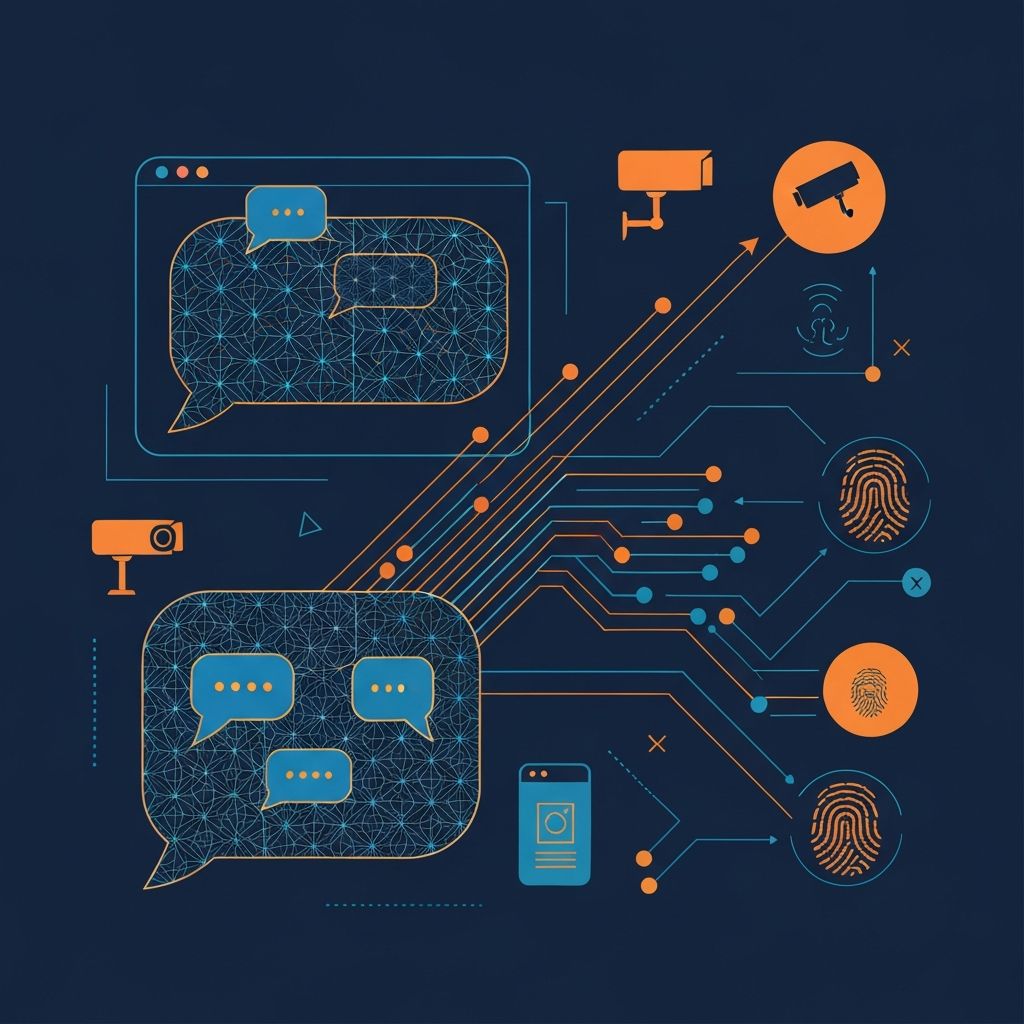
A class-action lawsuit filed on March 31 in San Francisco federal court alleges Perplexity AI embedded hidden trackers that share users' conversations with Meta and Google — even when users enable Perplexity's "Incognito" mode. The complaint claims trackers download automatically when users log in, giving Meta and Google access to chat data for advertising and resale. The lead plaintiff says he shared financial information, tax details and investment strategies with Perplexity's chatbot. Perplexity says it has not been served and cannot verify the claims.
Why it matters: For organisations using Perplexity or recommending it to staff, this is a prompt to review data handling agreements and acceptable use policies. More broadly, for any business adopting AI search tools, the lawsuit highlights that "private" and "incognito" modes may not mean what employees assume they mean. Sensitive business queries typed into AI assistants may be flowing to third parties.

Arm Ships Its First In-House Chip After 35 Years
Arm unveiled the AGI CPU, a 136-core data centre processor on TSMC's 3nm process — the first production chip in the company's 35-year history. Meta co-developed the chip and is the lead customer, with OpenAI, Cerebras, Cloudflare, SAP and others as launch partners. Arm claims more than twice the performance per rack versus x86 at 300W TDP, and expects the chip to generate six times more revenue by 2031 than its $4 billion in 2025. Arm's stock jumped 16%.
Why it matters: For organisations planning AI infrastructure investments, the CPU layer now has a credible new option beyond Intel and AMD — both of which are reporting lengthening delivery wait times. For companies running agentic AI workloads at scale, the bottleneck is increasingly the CPU, not the GPU. Arm's entry signals that power efficiency, not raw compute, is becoming the primary constraint in data centre planning.

Q1 2026 VC Funding Smashes All Records at $297 Billion
Global VC investment hit $297 billion in Q1 2026, up over 150% year-on-year. AI startups captured 81% ($239 billion). Four companies — OpenAI ($120B), Anthropic ($30B), xAI ($20B) and Waymo ($16B) — accounted for 64% of all investment. Separately, legal AI startup Harvey hit an $11 billion valuation after raising $200 million, with 25,000+ custom AI agents running across 100,000+ lawyers in 60 countries. OpenAI is now generating $2 billion in monthly revenue ahead of a potential record-setting IPO.
Why it matters: For companies evaluating AI vendors, the funding environment means the major labs are well-capitalised but under growing pressure to demonstrate enterprise revenue ahead of IPOs. For businesses in professional services, Harvey's trajectory — from zero to 100,000+ lawyers in under four years — shows how fast AI-native competitors can scale in traditionally slow-moving industries.
Australia Watch
Anthropic Signs MOU with Australian Government
Anthropic CEO Dario Amodei visited Canberra on April 1 to sign a memorandum of understanding making Anthropic the first major AI lab to formally join Australia's National AI Plan. Under the agreement, Anthropic will share its Economic Index data to track AI adoption and its impact on workers, participate in joint safety evaluations with the AI Safety Institute, and explore data centre and energy investments across Australia. AUD$3 million in API credits has been allocated to ANU, Murdoch Children's Research Institute, Garvan Institute and Curtin University for health and research projects.
The first formal partnership between a frontier AI lab and the Australian government sets a template for how other labs may engage.
Copyright Reform Heats Up as AI Investment Arrives
Assistant Technology Minister Andrew Charlton said the "status quo is not working" on copyright and AI, signalling the government is under growing pressure to reform laws as it courts AI investment. Artists and rights holder groups are pushing back, arguing that AI companies should pay under existing law rather than receive new exemptions. Copyright was reportedly a key discussion point during Amodei's meetings in Parliament House. The government has already rejected a Productivity Commission proposal for a text-and-data-mining exception but is exploring licensing frameworks through the Copyright and AI Reference Group.
Businesses building AI products that use Australian content should track these discussions closely — the regulatory landscape is shifting.
Emerging Trends
ARC-AGI-3 Shows the Gap Between Benchmarks and Real Intelligence
The ARC Prize Foundation released ARC-AGI-3, a new interactive benchmark where AI agents must explore environments with hidden rules and zero instructions. Every frontier model scored below 1% — Gemini 3.1 Pro led at 0.37%, GPT-5.4 at 0.26%, Claude Opus 4.6 at 0.25%. Humans solve 100% of the same tasks.
For businesses deploying AI agents, this is a useful reality check: current models excel at pattern-matching familiar tasks but still cannot adapt to genuinely novel situations the way a human employee can.
AI Privacy Is the Next Trust Battleground
The Perplexity lawsuit and the Anthropic data leaks both landed in the same week. For businesses encouraging staff to use AI tools, the question of where conversation data ends up is no longer theoretical — it is becoming a litigation and compliance risk.
Now is a good time to audit AI vendor agreements and update acceptable use policies.
AI Infrastructure Is Diversifying Beyond GPUs
Arm's AGI CPU, NVIDIA's Vera Rubin, and Meta's custom MTIA accelerators all point to a future where AI data centres run on a mix of specialised silicon. For businesses with significant cloud or infrastructure spend, the assumption that "AI = GPUs" is increasingly outdated.
Power efficiency and CPU orchestration are becoming the binding constraints at scale.