The Weekly AI Digest
Week of 10–16 April 2026
Top 5 AI Stories This Week

OpenAI Projects $100 Billion in Ad Revenue by 2030
OpenAI told investors it expects to generate $2.5 billion in advertising revenue in 2026, scaling to $11 billion in 2027 and $100 billion by 2030. The ChatGPT ads pilot, launched in February for free-tier users, crossed $100 million in annualised revenue within six weeks and has attracted over 600 advertisers. Self-serve ad tools went live in April. The projections assume OpenAI reaches 2.75 billion weekly users by 2030. Anthropic has taken the opposite position, using a Super Bowl commercial to declare Claude will remain ad-free.
Why it matters: For advertisers, conversational AI is emerging as a high-intent channel where users explicitly state what they want. Early data shows ChatGPT referrals convert at 1.5x the rate of other channels. For businesses that depend on OpenAI, the shift is structural: the company that defined the AI era is now building an advertising business to fund it. For enterprises choosing between AI providers, the question of whether your assistant serves you or serves advertisers is becoming a real differentiator.

Anthropic Valued at Up to $800 Billion as Claude Opus 4.7 Nears
Anthropic has reportedly received multiple VC investment offers at valuations as high as $800 billion in recent weeks, more than double its $380 billion February valuation. The surge follows the Mythos reveal and Project Glasswing launch. Separately, The Information reported on April 14 that Anthropic is preparing to release Claude Opus 4.7 and a new AI design tool for websites and presentations, potentially as soon as this week. Anthropic is also building a major Claude Code desktop overhaul codenamed "Epitaxy" with multi-repo support and parallel sub-agent orchestration.
Why it matters: For organisations already using Claude, the rapid pace of releases means capabilities are changing quarter to quarter. For enterprises evaluating AI providers, Anthropic's trajectory from safety-focused niche player to $800 billion valuation contender is reshaping the competitive landscape. The design tool launch in particular signals Anthropic is moving beyond text and code into visual workflows where most business users actually spend their time.

OpenAI Launches GPT-5.4-Cyber for Security Defenders
OpenAI announced GPT-5.4-Cyber on April 14, a model fine-tuned for cybersecurity with fewer restrictions, available to highest-tier API customers who authenticate themselves as security defenders. The release is a direct response to Anthropic's Project Glasswing and the broader alarm around AI-powered vulnerability discovery. OpenAI is also developing "Spud," an enterprise-focused model expected around July that could match Mythos in cyber capabilities.
Why it matters: For security teams, the AI cyber arms race is now a two-horse contest between Anthropic and OpenAI, with both offering specialised models for defenders. For organisations that have been waiting to invest in AI-assisted security, the window to act is narrowing. The tools attackers will use are getting more capable every quarter. The tools defenders can access are available now but require authentication and investment to deploy.
Florida AG Launches Investigation into OpenAI over FSU Shooting
Florida Attorney General James Uthmeier launched a formal investigation into OpenAI and ChatGPT on April 9, demanding answers about the platform's role in last year's Florida State University mass shooting that killed two and injured five. The investigation focuses on OpenAI's content moderation practices and the potential for ChatGPT to facilitate harm. It follows growing scrutiny from state regulators as the US federal government remains deadlocked on AI legislation.
Why it matters: For companies deploying customer-facing AI tools, the Florida investigation signals that state-level enforcement is not waiting for federal legislation. Liability for AI-facilitated harm is being tested in real time. For enterprises evaluating AI vendors, questions about content moderation and safety practices are no longer just ethical considerations. They are legal and reputational risks that procurement teams should be factoring into vendor assessments.
Shopify Launches AI Toolkit for Claude Code, Codex and Cursor
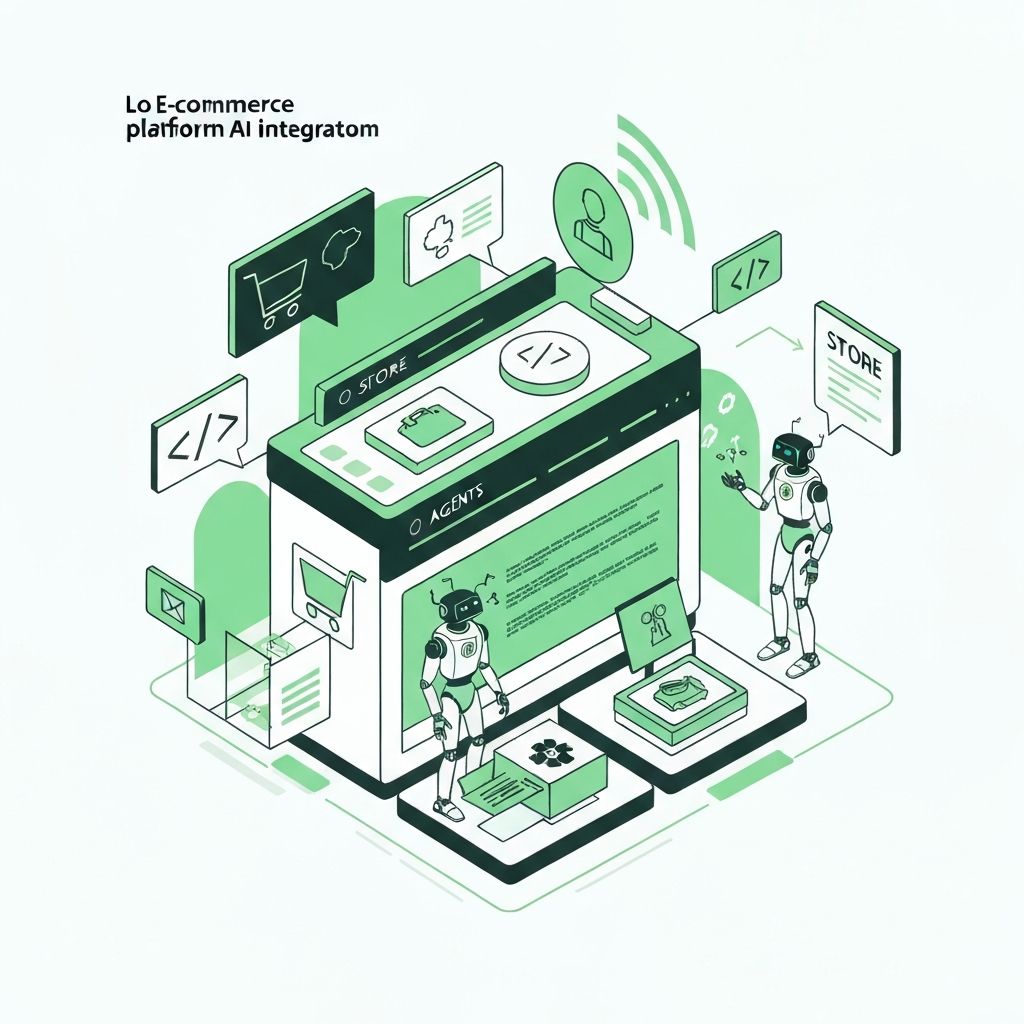
Shopify released an official AI Toolkit on April 9, enabling AI coding agents including Claude Code, Codex, Cursor and VS Code to build apps and manage stores directly through Shopify's API and CLI. The toolkit lets AI agents handle tasks like product management, order processing and storefront customisation without manual intervention. It is one of the first major commerce platforms to offer a native integration layer designed specifically for AI agents rather than human developers.
Why it matters: For companies building on Shopify, AI agents can now manage store operations directly rather than requiring developers to translate between AI output and platform APIs. For the broader e-commerce industry, this is an early signal of what agentic commerce infrastructure looks like in practice. For businesses in any sector with a developer platform, Shopify's approach is a template: building native agent integrations is becoming a competitive requirement.
Australia Watch
Copyright Working Group Expected to Deliver Recommendations
The Copyright and AI Reference Group is expected to meet this month following Minister Charlton's public comments that the "status quo is not working." The government has rejected a text-and-data-mining exception but is exploring licensing frameworks that would allow AI training on Australian content in exchange for fair compensation. The outcome will directly affect whether global AI labs choose to invest in local data centre infrastructure. Rights holder groups continue to push back against any changes that would weaken protections for Australian creators.
The copyright decision will shape whether Australia becomes a destination for AI infrastructure investment or remains a licensing bottleneck.
Data Centre Power Constraints Emerge as National Issue
Prediction markets now estimate that half of planned 2026 data centres globally will be delayed or cancelled due to power constraints. For Australia, which positioned itself as the second-largest data centre destination behind the US in 2024, this creates both risk and opportunity. The government's new data centre expectations require companies to demonstrate renewable energy sourcing and emissions plans. Anthropic's MOU included a commitment to explore data centre and energy investments, but the practical constraints of power supply and grid capacity remain unresolved.
Power availability is becoming the binding constraint on AI infrastructure growth in Australia.
Emerging Trends
AI Advertising Is No Longer a Side Hustle
OpenAI projecting $100 billion in ad revenue by 2030 is a statement of intent. For businesses using ChatGPT or building on OpenAI's APIs, this changes the relationship. Your AI assistant is now also an ad platform. Anthropic's decision to stay ad-free is positioning itself as the enterprise alternative for organisations that want clean separation between AI recommendations and commercial interests.
The choice between ad-supported and ad-free AI is becoming a strategic procurement decision.
The Cyber Arms Race Is Becoming a Product Category
Both Anthropic (Mythos via Glasswing) and OpenAI (GPT-5.4-Cyber) now offer specialised cybersecurity models for defenders. For CISOs and security teams, AI-assisted vulnerability discovery is no longer experimental. It is a product you can buy. The question is how quickly your organisation can integrate it before the same capabilities reach attackers through other channels.
AI-powered security tools are moving from research to enterprise procurement.
Agent-Native Platforms Are Becoming Table Stakes
Shopify building native integrations for AI coding agents is an early example of what every developer platform will need to offer. For businesses running platforms or marketplaces, the question is no longer whether to support AI agents but how quickly you can build the infrastructure to let them operate natively.
Platform companies should be evaluating agent integration strategies now.