The Weekly AI Digest
Week of 27 April – 3 May 2026
Top 5 AI Stories This Week
Microsoft and OpenAI Formally Restructure Partnership
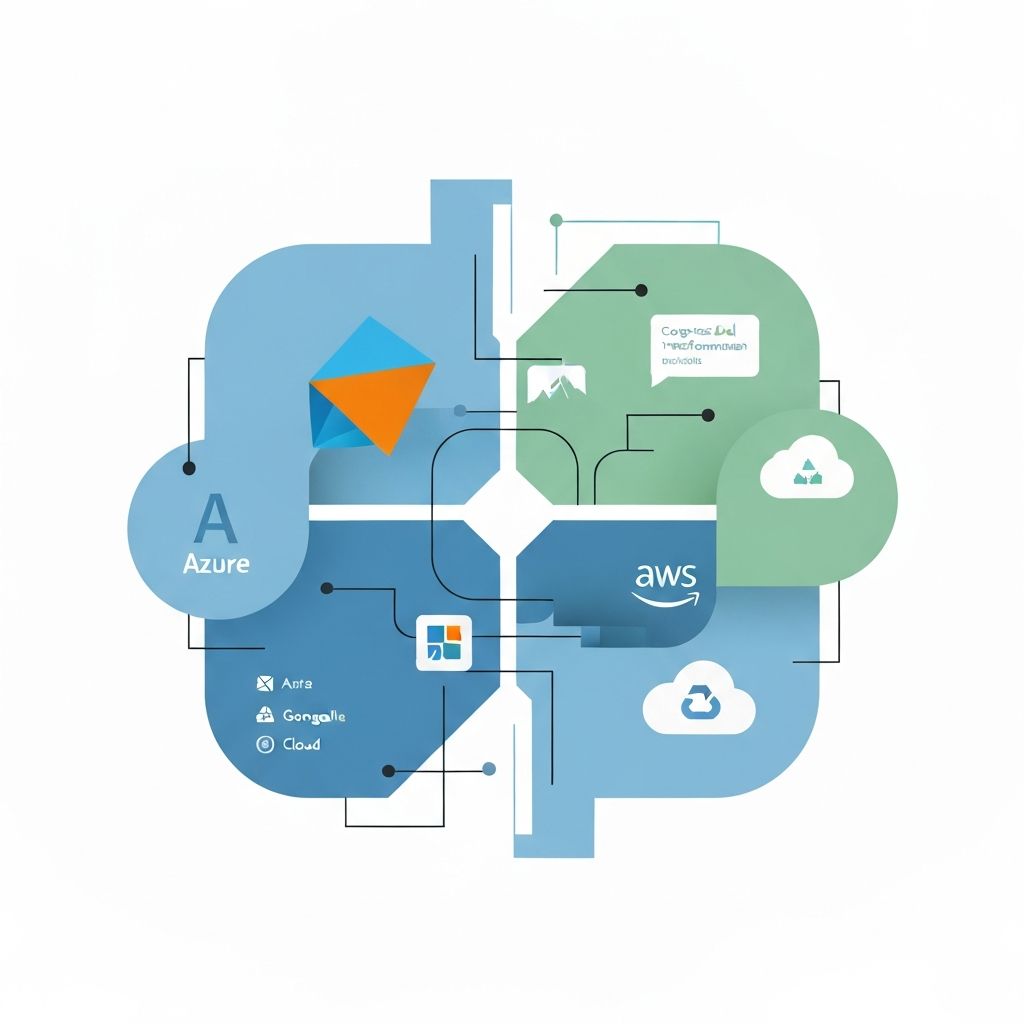
Microsoft and OpenAI announced on April 27 the restructuring of their seven-year partnership, ending the Azure exclusivity that has defined their relationship since 2019. Under the new terms, Microsoft retains a non-exclusive IP licence through 2032 and a 27% equity stake in OpenAI's restructured public-benefit corporation, but ends its Azure revenue share. OpenAI continues paying Microsoft a capped 20% revenue share through 2030 and is now free to serve products on AWS and Google Cloud. The deal cleared the way for OpenAI's models to launch on AWS Bedrock the following day and resolves the conflicts created by OpenAI's separate $50 billion commitment to Amazon disclosed in February.
Why it matters: This is the formal end of single-cloud lock-in for the most-used frontier AI models. Microsoft's read on this is captured in Nadella's January earnings call: "diversification of model providers, including our own, is a strategic priority." For enterprises, the practical effect is that procurement no longer needs to follow the model. GPT-class capability is available on whichever hyperscaler an organisation already runs on. The negotiating leverage that was previously concentrated in Azure now sits with the buyer.
Big Tech Earnings Confirm $700B AI Capex Year
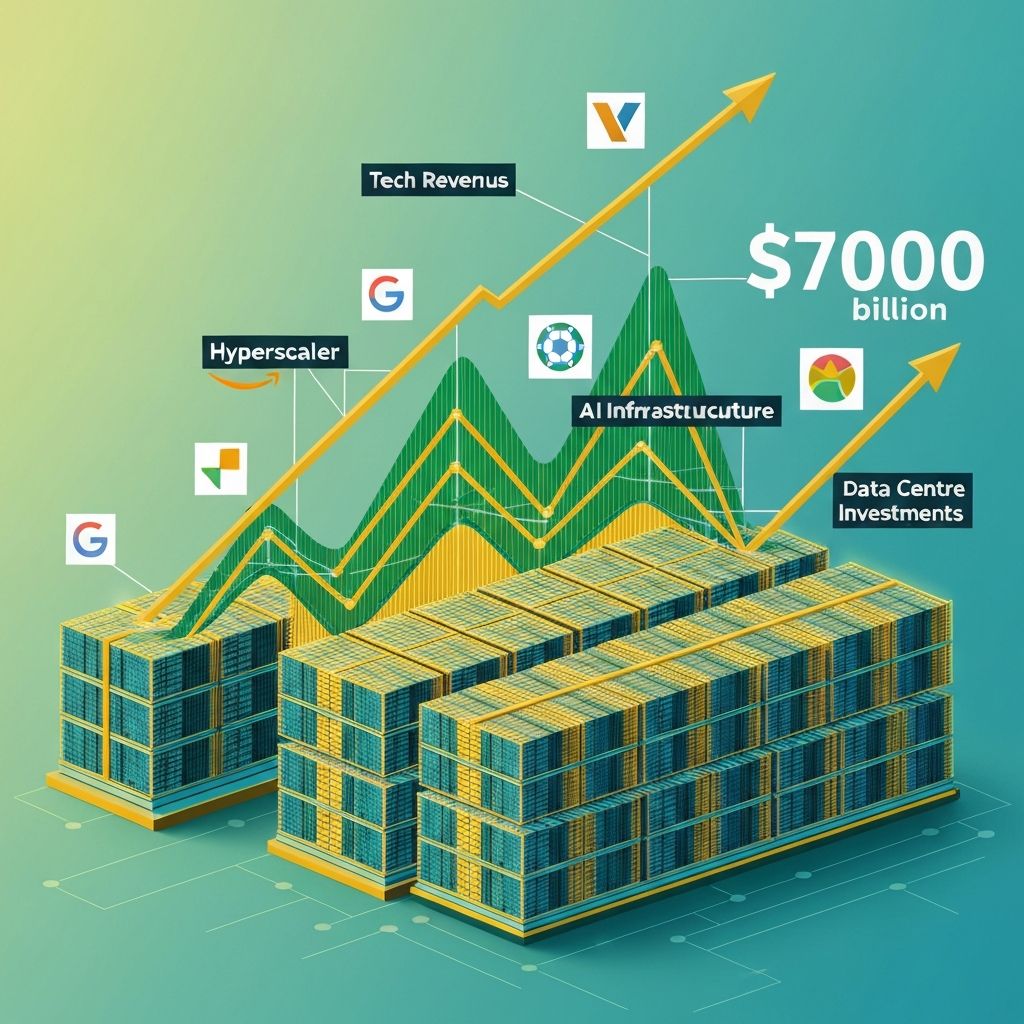
Alphabet, Microsoft, Meta and Amazon all reported Q1 results on April 29-30. Alphabet posted 22% revenue growth, its fastest in nearly four years, with Google Cloud crossing $20B quarterly revenue for the first time. Microsoft hit $82.9B in revenue with AI annual run-rate above $37B, Azure up 40% year-over-year, and Microsoft 365 Copilot paid seats topping 20 million. Apple posted record results without matching the capex pattern, spending $4.3B in the first half of fiscal 2026 against Microsoft's annualised $190B and Amazon's $200B. Combined hyperscaler AI infrastructure spend for 2026 is now tracking above $700B. Snap simultaneously announced 1,000 layoffs and 300 closed roles, citing AI productivity gains and noting that 65% of new Snap code is now AI-generated.
Why it matters: The "show me the ROI" question is being answered through the income statement. Every major hyperscaler beat estimates, and AI is now the primary driver. The Snap data point is the more uncomfortable signal: when 65% of code at a major platform comes from AI, the workforce question is no longer hypothetical. The combined picture is record profitability for AI sellers and visible workforce contraction at AI-leveraged buyers, with the productivity gain landing on shareholders rather than employees.
GPT-5.5 Lands in API with Doubled Pricing and Stronger Agentic Performance
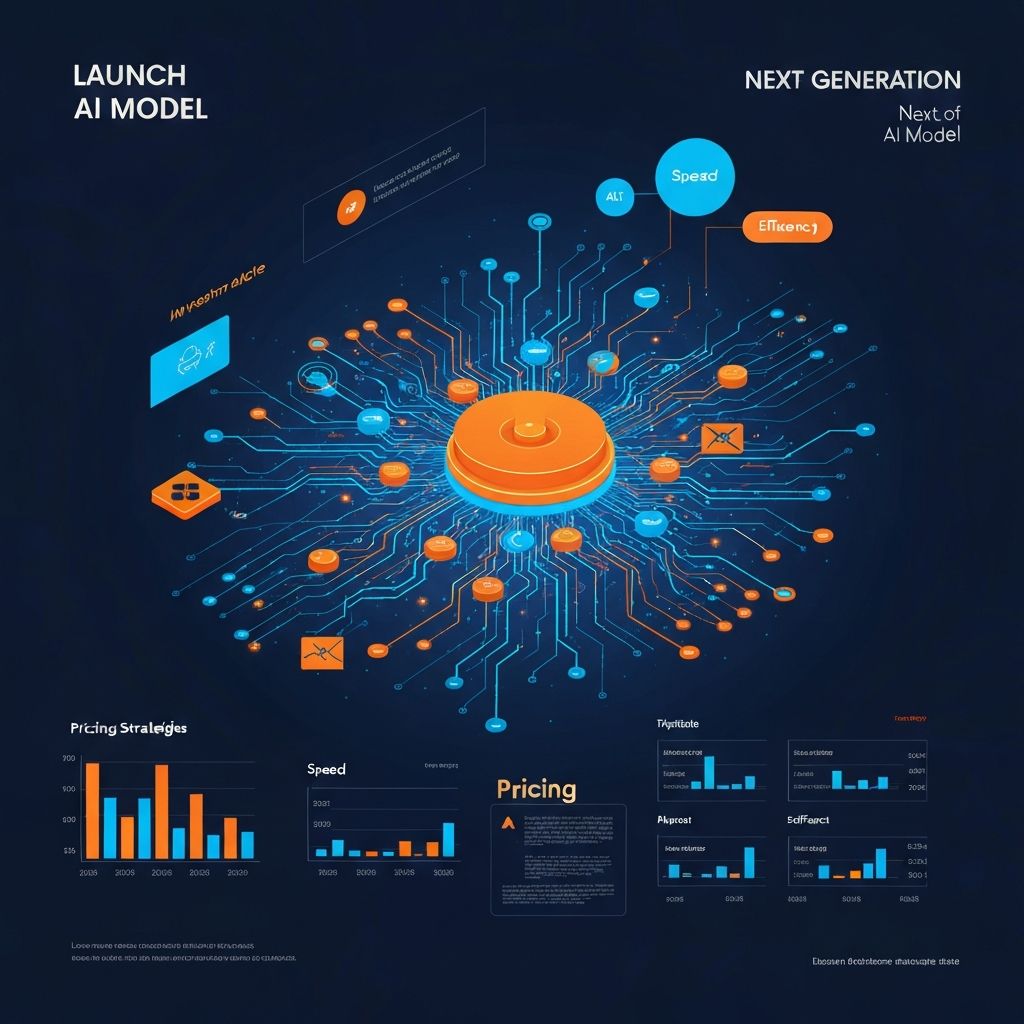
GPT-5.5 became available in the OpenAI API on April 24 after launching in ChatGPT and Codex on April 23. The model is the first fully retrained base model since GPT-4.5, natively omnimodal, and leads every publicly available model on Terminal-Bench 2.0 at 82.7% (Claude Opus 4.7 sits at 69.4%, Gemini 3.1 Pro at 68.5%). On GDPval, a benchmark covering knowledge work across 44 occupations, GPT-5.5 matches or beats human professionals 84.9% of the time. API pricing doubled from $2.50/$15 to $5/$30 per million input/output tokens, though OpenAI claims a 40% reduction in tokens consumed for equivalent Codex tasks brings effective cost increase closer to 20%. SWE-bench Pro lands at 58.6%, behind Claude Opus 4.7's 64.3%, with OpenAI flagging signs of memorisation in Anthropic's reported number.
Why it matters: The frontier has now seen two model releases in 14 days (Opus 4.7 on April 16, GPT-5.5 on April 23) where headline pricing changed materially through tokenizer or pricing shifts. Buying frontier capability now requires modelling effective cost on real workloads, not list price. The Terminal-Bench gap also matters for agentic deployments where multi-step task completion is the primary use case, and is the strongest signal yet that the agentic computer-use category is now contested at the frontier.
Five Eyes Issue Joint Agentic AI Security Guidance
On May 1, six cybersecurity agencies across the Five Eyes alliance jointly published "Careful Adoption of Agentic AI Services," authored by CISA, NSA, Australia's ASD ACSC, the Canadian Centre for Cyber Security, New Zealand's NCSC, and the UK's NCSC. The guidance identifies prompt injection as the most persistent threat, calls out the gap between agentic AI capability and current security controls, and explicitly warns against granting broad or unrestricted access to AI services. The release coincides with Black Hat Asia reporting that the window from bug discovery to working exploit has collapsed from five months in 2023 to ten hours in 2026, with frontier LLMs handling much of the offensive work.
Why it matters: This is the first coordinated multilateral guidance on agentic AI security, and the ASD ACSC co-authoring puts Australian organisations on direct notice. Most enterprise agentic deployments to date (Microsoft 365 Copilot, GitHub Copilot Workspace, Salesforce Agentforce, ServiceNow AI agents) ship with access patterns the guidance flags as too broad. Boards in regulated sectors should be asking now whether existing AI agent permissions could survive a Five Eyes-aligned audit.
Anthropic Weighs $900B Round as White House Pushes Back on Mythos
Anthropic is reportedly considering a fresh funding round at a $900B+ valuation that would overtake OpenAI as the world's most valuable AI startup. The valuation surge follows Google's $40B commitment on April 24 and Amazon's $25B commitment on April 20, putting Anthropic's combined recent compute and cash deals north of $200B. On April 30, the Wall Street Journal reported that the White House is opposing Anthropic's plan to expand access to Mythos, the company's cybersecurity-focused frontier model, citing concerns over a tool capable of carrying out cyberattacks. Anthropic has restricted Mythos access to a limited group of partners while it works through evaluation and safeguards, though there are reports of unauthorised access to the model.
Why it matters: The Mythos pushback is the first concrete case of a US administration intervening in commercial release decisions for a frontier AI model. For enterprise buyers, this signals that frontier model availability is no longer a purely commercial question. Capability tiers, particularly in cybersecurity, biology and offensive tooling, are now subject to political and national-security constraints that procurement teams should be tracking alongside contractual terms. The valuation story confirms that the compute-revenue flywheel at the top of the AI market is accelerating despite that political overhang.
Australia Watch
APRA Flags AI Governance Gap Across Banks, Insurers and Super
APRA published a letter to regulated entities on April 30 warning that governance, risk management, assurance and operational resilience practices are not keeping pace with AI adoption across the financial system. The letter follows a targeted supervisory review in late 2025 and identifies concentration risk (heavy reliance on a single AI provider for multiple use cases) and board-level technical literacy as priority concerns. APRA is not introducing AI-specific prudential standards at this stage but expects regulated entities to close the gap between AI capability deployed and ability to monitor and control it.
APRA-regulated entities should expect increased supervisory scrutiny of AI governance arrangements.
Pentagon Signs Classified AI Deals with Microsoft, AWS, NVIDIA, Reflection AI
The US Department of Defense announced expanded AI agreements on May 1 with Microsoft, AWS, NVIDIA and Reflection AI for use of advanced AI tools on classified military networks. The signal for Australia is the AUKUS context: with ASD already inside the Microsoft Cyber Shield arrangement and Five Eyes agencies co-authoring agentic AI guidance the same week, sovereign AI capability for Australian defence and intelligence workloads is now a coordinated multilateral programme rather than a series of national initiatives.
AUKUS AI capability is becoming a coordinated multilateral programme.
APS GovAI Chat Trial Expands Beyond 2,600 Users
The APS GovAI Chat trial, the sovereign-hosted AI service for federal employees, has continued expanding access through GovTEAMS this week. The trial sits alongside existing Copilot and ChatGPT entitlements and is the operational front of Australia's preference for a domestically hosted option in regulated and classified workloads.
Sovereign AI options for government workloads continue to expand.
Emerging Trends
Frontier Pricing Has Become a Procurement Discipline
Two consecutive frontier releases (Opus 4.7's tokenizer in mid-April, GPT-5.5's price doubling in late April) have moved effective cost above headline cost as the right unit of comparison. Teams running production AI workloads should be measuring tokens per completed task and cost per agent run, with model selection driven by total cost of ownership rather than rate-card comparison.
Measure effective cost on real workloads, not list price.
AI Productivity Is Landing in Headcount, Not Growth
Snap's 1,000 layoffs alongside 65% AI-generated code is the clearest data point yet that AI gains are being claimed in workforce reduction rather than output expansion. Combined with Meta and Microsoft's earlier announcements and the Q1 capex picture, the operational question for boards is whether their AI investment thesis is growth-oriented or replacement-oriented, and whether their workforce strategy reflects that choice honestly.
Boards should clarify whether their AI investment thesis is growth-oriented or replacement-oriented.
Frontier Model Access Is Becoming a Geopolitical Question
The White House's Mythos opposition, Five Eyes joint guidance, and Pentagon classified AI deals all landed in the same seven-day window. For multinationals with AI procurement spanning jurisdictions, model availability and capability tiers are now subject to political constraints that change faster than enterprise procurement cycles can adapt.
Model availability is now subject to political and national-security constraints.